
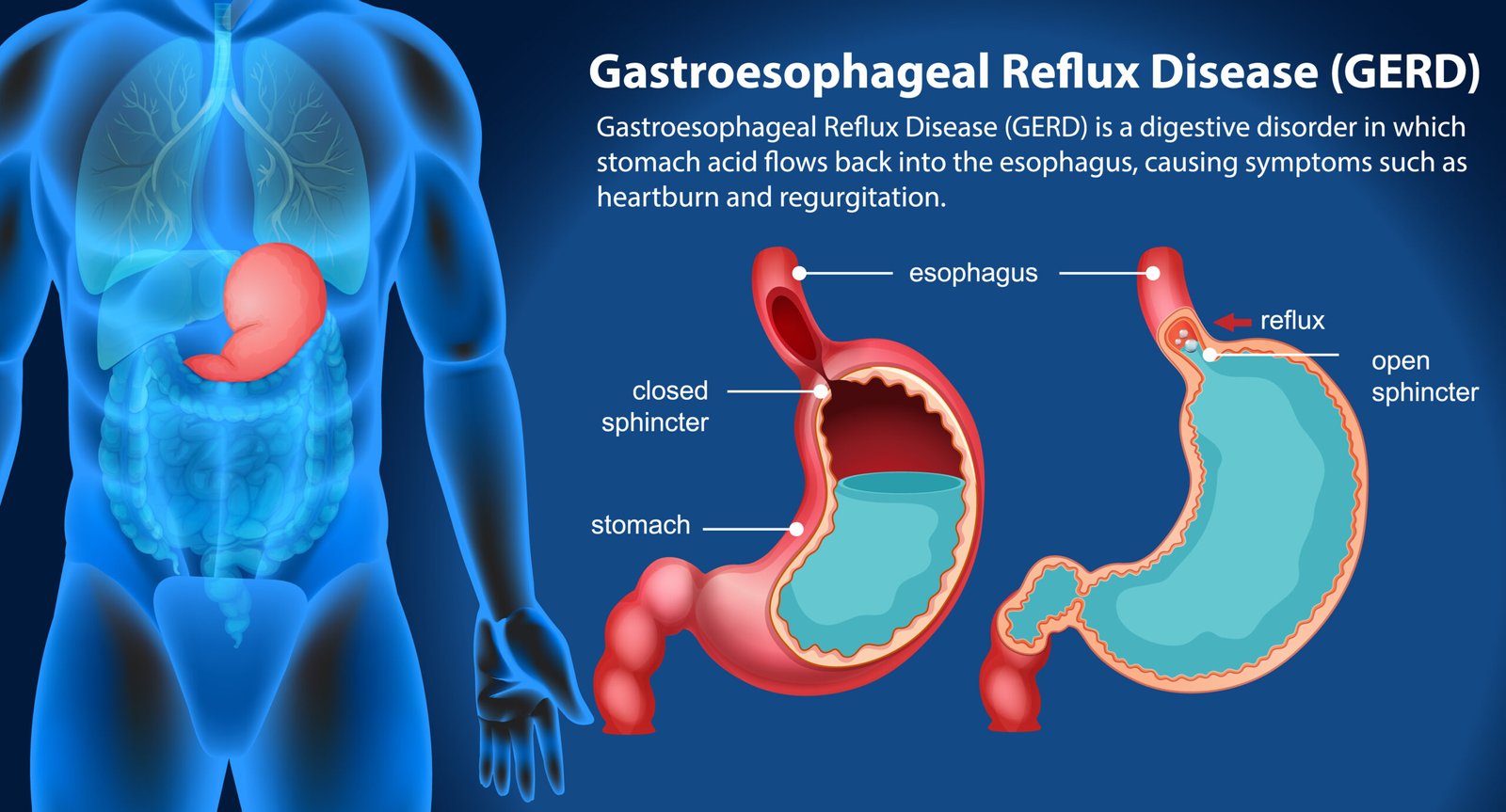
Acid reflux is a common digestive problem that many people ignore in the beginning. When it happens often, it may turn into GERD, also called gastroesophageal reflux disease. If you feel burning in the chest, a sour taste in the mouth, or repeated throat irritation, you may need proper GERD treatment.
What Is GERD and Why Does It Happen
GERD happens when stomach acid flows back into the esophagus. Normally, a muscle called the lower esophageal sphincter closes after food enters the stomach. If this muscle becomes weak or relaxes at the wrong time, acid moves upward and irritates.
Common causes include
- Weak lower esophageal muscle
- Obesity or excess weight
- Eating large meals
- Spicy and oily foods
- Smoking and alcohol
- Pregnancy
- Hiatal hernia
If acid reflux happens more than twice a week, it may be chronic acid reflux. In such cases, chronic acid reflux treatment becomes important to prevent complications.
Common Symptoms of Chronic Acid Reflux
Many patients ignore early signs. But frequent symptoms should not be neglected.
- Burning sensation in the chest
- Regurgitation of sour liquid
- Difficulty swallowing
- Chronic cough
- Hoarseness of voice
- Bloating and gastric pain
If symptoms continue for weeks, consult an acid reflux specialist for proper evaluation and GERD treatment.
How Gastric Disorder Diagnosis Is Done
Proper gastric disorder diagnosis helps confirm whether the problem is simple acidity or GERD.
A qualified gastroenterologist may suggest
- Upper GI endoscopy
- pH monitoring test
- Esophageal manometry
- Ultrasound or other imaging if required
Accurate gastric disorder diagnosis ensures the right gastroesophageal reflux treatment without delay. Early diagnosis also helps rule out other issues like ulcers or chronic gastritis.
Natural Ways to Control Acid Reflux
Many patients can control mild symptoms with lifestyle changes. These steps support chronic acid reflux treatment and reduce dependence on medicines.
Maintain a Healthy Weight
Excess belly fat increases pressure on the stomach and pushes acid upward.
Eat Smaller Meals
Avoid heavy meals. Eat small portions at regular intervals.
Avoid Trigger Foods
Reduce spicy food, fried items, chocolate, caffeine, and carbonated drinks.
Do Not Lie Down. Immediately
Wait at least two to three hours after meals before sleeping.
Elevate Head While Sleeping
Raise the head side of your bed slightly to prevent acid from flowing back.
Stop Smoking and Limit Alcohol
Both weaken the food pipe muscle and worsen GERD symptoms.
These steps are helpful for mild cases. But if symptoms continue, medical GERD treatment is necessary.
Medical GERD Treatment Options
When lifestyle changes are not enough, doctors recommend medicines as part of gastroesophageal reflux treatment.
Antacids
Provide quick relief by neutralizing stomach acid.
H2 Blockers
Reduce acid production in the stomach.
Proton Pump Inhibitors
Commonly prescribed for chronic acid reflux treatment. They reduce acid production effectively and allow healing.
Medicines must be taken under the guidance of a GERD specialist. Self-medication for long periods can cause side effects.
When Surgery Is Needed for GERD
Some patients do not respond to medicines or need long-term treatment. In such cases, surgical options may be advised.
Laparoscopic fundoplication is a common procedure. It strengthens the lower esophageal muscle and prevents acid reflux.
For advanced and safe surgical care, many patients consult experienced centers like Desai Surgical in Vadodara, known for comprehensive gastric care.
Surgery is recommended only after proper diagnosis of a gastric disorder and detailed evaluation by a gastroenterologist.
Link Between GERD and Other Gastric Disorders
GERD may sometimes be associated with other digestive problems, like chronic gastritis.
Chronic gastritis treatment becomes necessary when stomach lining inflammation coexists with acid reflux. Ignoring symptoms can lead to ulcers or bleeding.
Persistent gastric pain should not be ignored. Timely gastric pain treatment prevents complications and improves quality of life.
Why Expert Consultation Is Important
Many patients keep taking over-the-counter medicines for years. This may control symptoms temporarily but does not solve the root cause.
Consulting a qualified gastroenterologist or gastric disorder specialist ensures
- Correct diagnosis
• Personalized GERD treatment
• Safe chronic acid reflux treatment
• Monitoring for complications
A trained GERD specialist evaluates your symptoms carefully and suggests the most suitable gastroesophageal reflux treatment based on your condition.
Possible Complications If GERD Is Ignored
Untreated GERD may lead to
- Esophagitis
• Ulcers
• Narrowing of the food pipe
• Barrett esophagus
• Increased risk of esophageal cancer
This is why early gastric disorder diagnosis and timely GERD treatment are very important.
How to Prevent Recurrence of GERD
Even after successful treatment, maintaining healthy habits is necessary.
- Follow the doctor’s advice regularly.
• Take medicines as prescribed.
• Avoid trigger foods.
• Maintain a healthy body weight.
• Attend follow-up visits
Prevention and regular monitoring are key parts of long-term gastroesophageal reflux treatment.
Final Thoughts on Managing GERD Safely
GERD is common but should not be taken lightly. Simple lifestyle changes can control mild symptoms. However, persistent heartburn requires proper chronic acid reflux treatment under expert supervision.
Accurate gastric disorder diagnosis, timely gastric pain treatment, and guidance from an experienced gastroenterologist help prevent serious complications.
If you experience frequent acidity or chest burning, consult a trusted GERD specialist in Vadodara for proper evaluation and safe gastroesophageal reflux treatment. Early care leads to faster recovery and better digestive health.